
The Global Race for Digital Infrastructure
Across Southeast Asia, countries like Malaysia, Indonesia, and the Philippines are in a digital infrastructure arms race, each vying to become the region’s next big data hub. But as the server racks multiply, so too does electricity demand. Malaysia alone is on track to multiply its data centre power use by almost eight times by 2030, a jump that would rival the entire electricity consumption of Singapore.
The result is a dilemma. Either countries rapidly invest in clean energy or risk letting their digital future become powered by coal and diesel. Without urgent action, the very infrastructure meant to enable the future will drag economies back into fossil dependence. This is the uncomfortable truth: digital transformation, without energy transformation, can become a climate liability.
A Wake-Up Call for Africa
This is not a distant problem for Africa. It is a window into what is about to happen here.
Africa’s digital rise is underway. Cloud adoption is surging. Content demand is localising. Fintech, AI, and enterprise software are scaling. Governments are digitising services, banks are moving to the cloud, and startups are emerging daily with data-hungry applications. All this requires a physical backbone: data centres.
But data centres are not just buildings with servers. They are power-intensive ecosystems. They require constant electricity, advanced cooling, high connectivity, and guaranteed uptime. If not managed carefully, they can become some of the most carbon-intensive assets in a country.
What Southeast Asia Teaches Us
The lesson from Southeast Asia is clear. Without proper planning, data centres can lock countries deeper into fossil dependency. Malaysia could see a sevenfold increase in emissions from data centres by 2030. Indonesia’s Java grid, where most of its facilities are located, is still coal-powered. The emissions risk is real.
Ghana’s Window of Opportunity
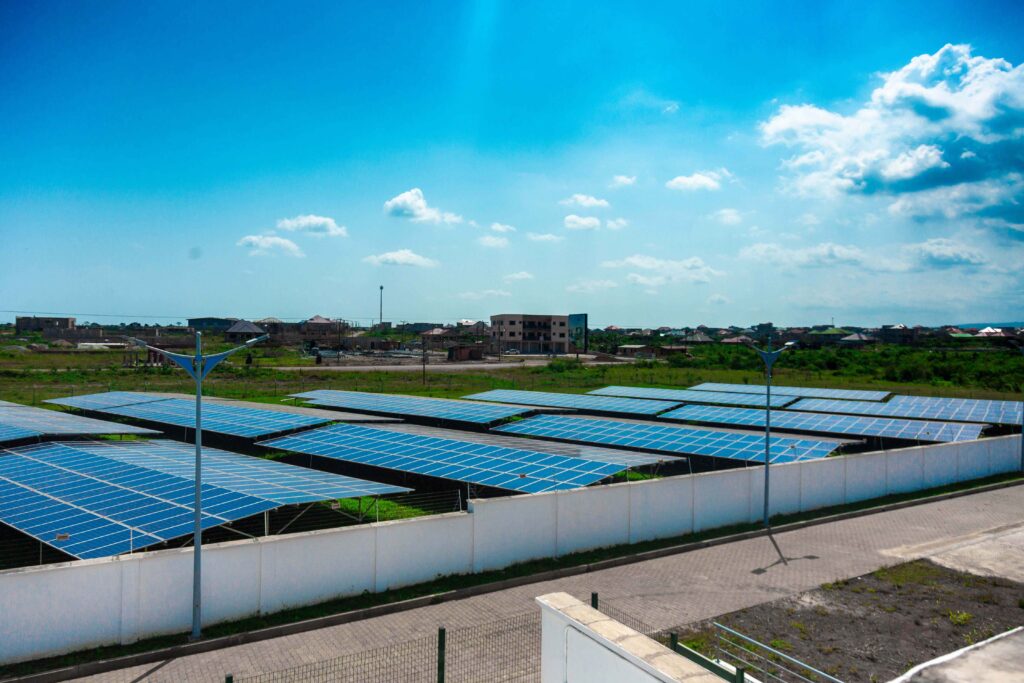
In Ghana, early examples are showing what’s possible. Some facilities, like Onix in Accra, are beginning to integrate solar energy to cover daytime usage, with plans to expand to full 24/7 clean power through battery systems. It is a step forward, but the broader question remains: will the rest of the region follow suit?
The stakes are high. Ghana’s power grid is already stretched. In many parts of West Africa, electricity access is unreliable and prices are volatile. Much of the power still comes from thermal plants running on fossil fuels. If data demand continues to grow without serious energy planning, we will see the rise of generator-powered digital infrastructure – clean tech running on dirty fuel.
A Clean Energy Strategy for Data Centres
But with the right strategy, this challenge becomes an opportunity. Data centre development can drive investment in solar, wind, and smart grid infrastructure. It can force innovation in energy efficiency. It can catalyse energy market reform.
So what must be done?
Governments need to embed digital infrastructure into national energy strategies. That means creating policies that allow direct clean energy procurement for data centre operators, such as renewable energy certificates or power purchase agreements. It means setting energy efficiency standards that match global benchmarks. And it means rethinking where we build and how we power these facilities.
Regional planning is also critical. There is no reason why data centres should only exist in capital cities with fragile grids. With fibre connectivity expanding, they can be sited near renewable energy hubs and still serve national needs.
The Urgency of Planning Now
Ghana and other African countries now have a chance to lead. Not just in building digital infrastructure, but in showing how it can be clean, reliable, and resilient. A handful of pioneers are showing it is possible. But we need more. More ambition, more support, more alignment between the digital and energy agenda.
Because data centres are not a luxury. They are the engines of economic growth, innovation, and digital sovereignty. And if we are not careful, they will become engines of emissions too.
Africa can build a digital future. But whether that future is green or grey depends entirely on the choices made right now.
Africa’s digital future must be clean, resilient, and ready. If you’re a policymaker, investor, or enterprise with a stake in that future, we’d love to hear from you.
Get in touch and let’s shape the next phase together.