Earlier this week, our team had the opportunity to join industry leaders and innovators in Sandton, Johannesburg, for the Pan African Data Centre Conference. The two-day event gathered experts from across the continent and beyond to explore the most pressing challenges, biggest opportunities, and transformative trends shaping Africa’s digital infrastructure future.
Here are seven of the most compelling themes that emerged from the sessions we attended:
1. Data Centres as Engines of Economic Transformation
Data centres are no longer just facilities for storage and uptime. They are foundational to Africa’s digital future, enabling cloud adoption, accelerating government digitisation, and transforming traditional sectors like mining, agriculture, and transport. More than infrastructure, they are becoming enablers of national competitiveness and industrial resilience. We saw examples of data-driven mining, smart agricultural models, and decentralised infrastructure hubs that are helping communities leap into the digital age.
Their role extends into the heart of Africa’s development priorities. With sovereign data strategies gaining momentum, the power to process, store, and analyse data locally is now being recognised as a core economic advantage. The message was loud and clear: control your data, control your future. For countries seeking both digital sovereignty and inclusive growth, investment in data centres is no longer optional. It’s essential.
2. AI is Changing Everything, Including the Workforce
The AI revolution is reshaping how data centres are operated, staffed, and integrated into wider society. From recruitment to operations, AI tools like ChatGPT are now streamlining processes, boosting efficiency, and transforming how tasks are completed. We heard how workloads that once took days can now be tackled in under an hour. It’s a dramatic shift in productivity that is rewriting job descriptions and expectations across the industry.
But with great innovation comes a crucial warning: those who do not adapt risk being left behind. AI will not replace every job, but it will replace every job that doesn’t evolve. This is where Africa’s youth come in. With the youngest population globally, digitally native and eager to learn, there is enormous opportunity. The conference called for urgent investment in AI training, coding education, gender-inclusive programmes, and new learning models that go beyond traditional universities. Africa can lead, but only if it prepares its people now.
3. Adapting Global Standards to Local Realities
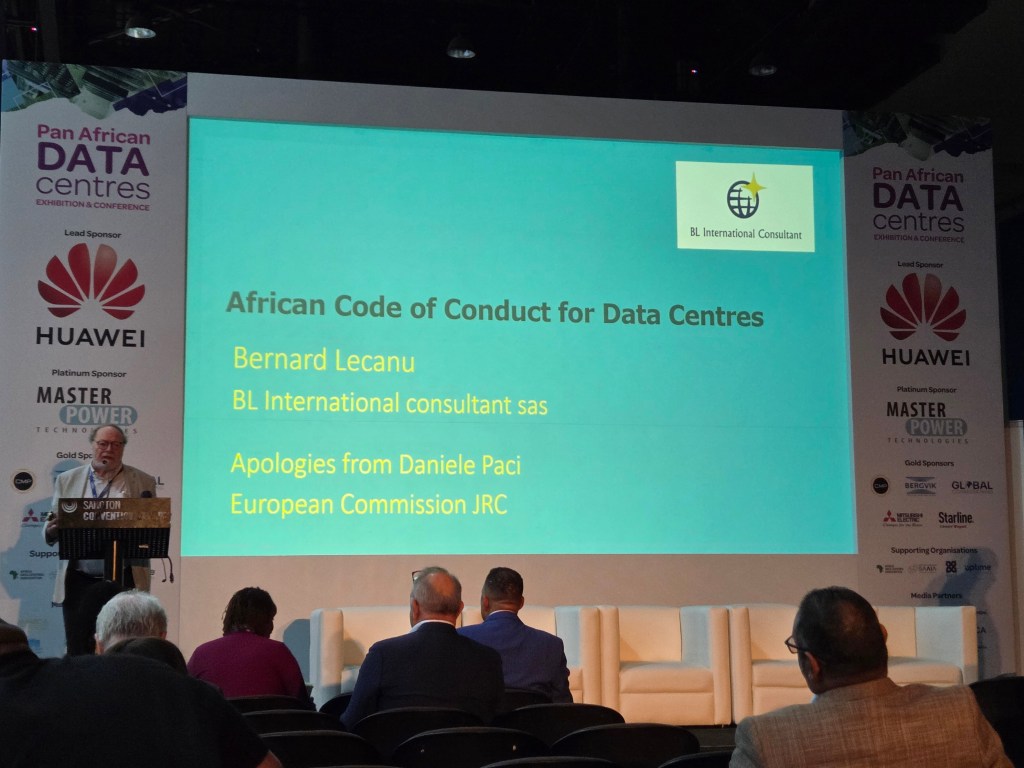
In a sector where global benchmarks are often copied and pasted, one project stood out. An initiative funded by the European Commission is helping African data centres adopt and adapt Europe’s energy efficiency Code of Conduct. This isn’t about importing rigid frameworks. It’s about tailoring world-class methods to suit African infrastructure, climate, and operational contexts. That means training, phased implementation, and peer-driven improvement.
The initiative was one of the most practical and forward-thinking discussed at the conference. Operators will benefit from structured guidance, transparency, and a framework for continuous progress. At Onix, we are especially excited about this direction. With our investment in solar generation and our long-term plans to move fully off-grid, we are in a strong position to meet many of these requirements from the outset. This aligns directly with our sustainability vision and our commitment to lead the industry not only in capacity, but in responsibility.
4. Talent is the Sector’s Greatest Challenge and Opportunity
No matter how advanced the technology, it’s the people who keep data centres running. Right now, the human capital gap is one of the industry’s greatest risks. Sessions highlighted the brain drain of skilled African professionals, many of whom are leaving for opportunities in Europe, North America, and Asia. Nearly 40 percent of participants cited retention as a critical issue. It’s not just about training more people. It’s about building an ecosystem where they want to stay.
The conversation around HR and workforce development was refreshingly honest. While technical upskilling is vital, it must be matched with improved quality of life, competitive salaries, and a culture of respect and belonging. HR leaders were called to the table alongside engineers, recognising that organisational culture, career growth, and community engagement are just as important as rack density and cooling technology. Africa’s digital future depends on its ability to nurture and keep talent at home.
5. Supply Chain and Procurement Bottlenecks Are Holding Back Progress
If Africa’s data centre sector is a fast-moving train, its supply chain is the section of track most in need of repair. Delegates spoke of long delays for spare parts, inflexible procurement frameworks, and tariffs as high as 25 percent that make components prohibitively expensive. Global suppliers often prioritise larger, Western hyperscale projects, leaving African operators scrambling to catch up.
The effects are systemic. Delays reduce uptime, inflate project timelines, and undermine investor confidence. Some operators are turning to innovative workarounds like local battery filling to extend shelf life in unreliable grid environments. But the call was clear. It’s time for African governments, vendors, and industry associations to come together to streamline procurement, reduce trade barriers, and strengthen regional manufacturing. Resilience isn’t built on power systems alone. It must include reliable, regional supply chains.
6. Operational Culture Needs to Catch Up with Design Standards
The technology is evolving, but is the culture? While billions are spent designing Tier III and Tier IV facilities, less attention is given to what happens after launch. Over 70 percent of outages are caused by human error, and 52 percent of staff don’t consistently follow operational procedures. The gap between build and run is costing the industry more than we admit.
However, change is underway. New tools, from DCIM platforms to commissioning apps, are helping teams enforce quality, monitor environments, and make data-driven decisions. Cultural transformation is harder to engineer than server rooms, but it’s just as vital. As AI, high-density workloads, and hybrid architectures become the norm, operators must embrace a mindset of discipline, training, and transparency. The future of uptime depends on it.
7. Africa’s Digital Future Must Be Inclusive, Sovereign and Strategic
The conference closed on a visionary note. Africa must build its own digital backbone, on its own terms. That means embracing sovereignty, owning the infrastructure, setting the policies, and shaping the content. But it also means strategy. We need to invest wisely, regulate smartly, and include everyone, especially the underserved and the landlocked.
The rise of sovereign AI, Africa-focused cloud platforms, and culturally rooted digital experiences offers a new path forward. The idea that Africa can shape the next wave of digital creativity is no longer far-fetched. It’s already happening. The question is whether we will seize it. The call from Sandton was for collaboration, courage, and clarity. And for those of us committed to building this future, the time to act is now.
In Closing
As Africa’s demand for compute, storage, and connectivity continues to grow, the conversation is evolving. It’s no longer just about uptime or latency. It’s about people, policy, energy, sovereignty, and the systems that tie them together.
At Onix, we return from this conference more determined than ever to play a meaningful role in this journey. We thank the organisers for a deeply insightful and collaborative event, and we look forward to building the future of Africa’s digital backbone together.
If you want to learn more about Onix and how we are pushing the boundaries of data centres in Africa, please get in contact!