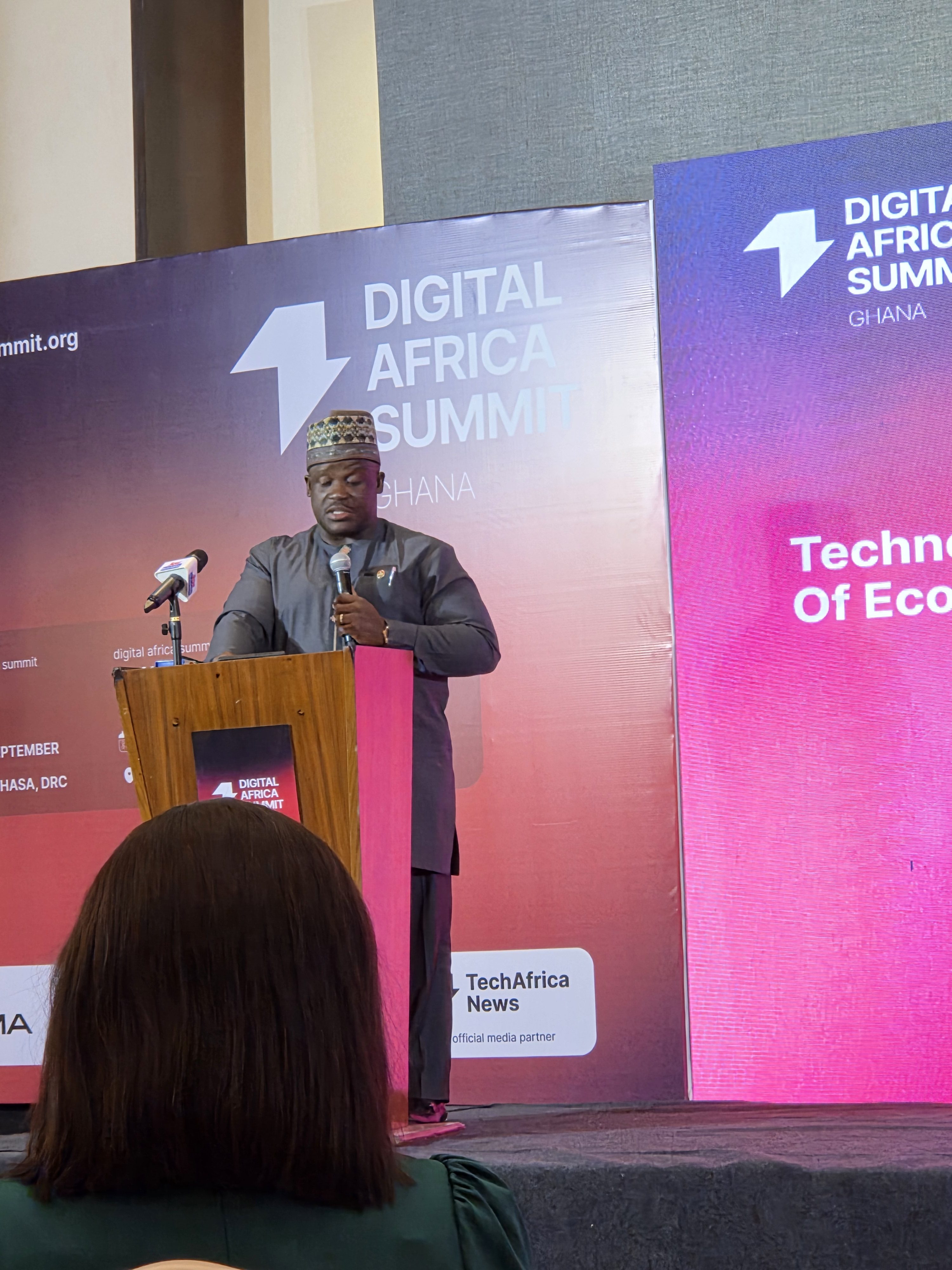
On 3 September 2025, Accra hosted the inaugural Digital Africa Summit Ghana, a high-level gathering co-organised by the Government of Ghana and the GSMA. The event brought together policymakers, regulators, industry leaders, innovators, development partners and civil society to align on Ghana’s digital progress and the actions required to close gaps ahead of 2029.
Event Context and Highlights
- The Government emphasised that technology is a sector of sectors, carrying agriculture, health, education, manufacturing, and finance on its back. Ghana’s goal is to accelerate digitalisation to transform productivity and improve lives across every domain.
- The GSMA presented its national digitalisation report for Ghana, showing strong performance in mobile money and 4G coverage, but also a persistent 62% usage gap where covered citizens are not yet connected.
- Recent reforms such as the removal of the e-levy, spectrum neutrality, and the expansion of rural fibre were identified as major steps forward.
- By 2029, the right reforms could increase unique internet users by 43%, drive billions in GDP growth, and create hundreds of thousands of jobs.
The Panel: Powering Innovation – Data Centres as the Core of Africa’s AI Revolution
One of the standout sessions focused on the role of data centres in Africa’s AI-driven future. The panel brought together voices from finance, telecoms, academia, and infrastructure.
Representing Onix Dat a Centres and Broadspectrum, Kris M. Senanu joined the discussion to underline the strategic importance of world-class, carrier-neutral data centres for Ghana. His contributions emphasised:
- Sovereignty and trust: Ghana’s most critical data should not leave the continent. Hosting it locally under Ghanaian law strengthens trust in fintech, govtech, and AI services.
- Latency and reliability: AI, financial services, and health applications demand millisecond response times. With a Tier IV certified facility, Onix ensures 99.995% uptime and seamless low-latency interconnection.
- Value capture: Keeping workloads in Ghana allows domestic SaaS, analytics, and AI services to flourish instead of exporting opportunity abroad.
- Jobs and skills: Carrier-neutral, certified facilities create new pathways for Ghanaian engineers, operators, and cybersecurity professionals.
- Investment climate: Certification, stable power agreements, and clear policy frameworks build confidence for investors and long-term partnerships.
Expected Outcomes if Implemented
The panel discussion outlined several expected outcomes if Ghana strengthens its data centre ecosystem:
- Reduced latency and cost for fintech, healthtech, govtech, and AI workloads.
- Growth of domestic digital services and innovation ecosystems.
- Creation of technical jobs and training pipelines across ICT.
- Greater investor confidence in Ghana’s digital economy.
Next Steps for Ghana’s Digital Infrastructure
The session also flagged actions to accelerate progress:
- Establish a national data centre policy package covering residency, carrier neutrality, certifications, and interconnect standards.
- Secure long-term, low-cost renewable and hybrid power agreements for facilities.
- Expand in-country IXPs to end international hairpinning.
- Build education-to-employment pathways for data centre skills.
- Launch accelerators to drive local AI and data entrepreneurship.
The Digital Africa Summit Ghana 2025 reinforced that Ghana’s ambitions for digital leadership cannot be achieved without resilient infrastructure. As Kris Senanu made clear, Tier IV, carrier-neutral data centres like Onix, combined with Spectrum Fibre’s 7,500 km backbone, are not just support services, they are the backbone of Africa’s AI revolution.
For information about Onix Data Centres or Broadspectrum, and what we can do to empower your business locally in Ghana, get in contact!