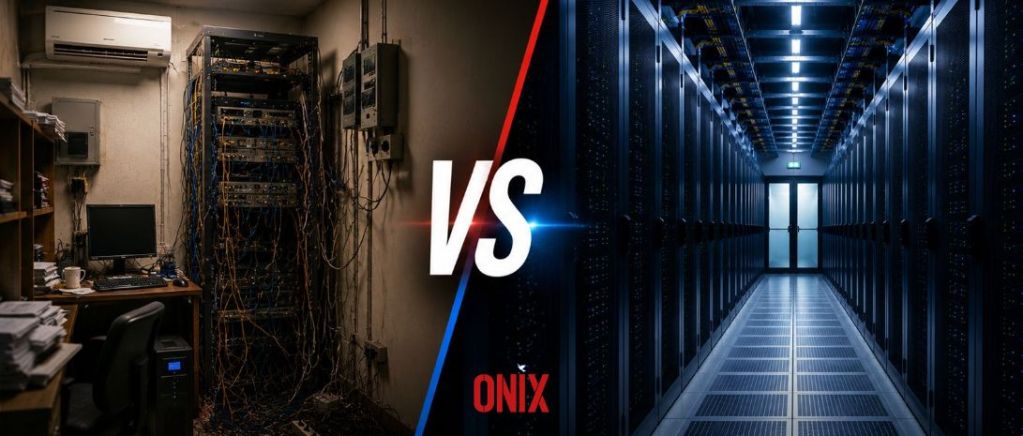
In many businesses, the server room was never really designed. It started as a practical solution: a cabinet in the office, a locked room near the IT department, a few racks, some backup power, an air-conditioning unit, a firewall, a switch, a generator connection and enough technical knowledge to keep things moving. For a while, that may have been enough, especially when the business was smaller and the systems being supported were less critical.
As the business grows, however, the role of that room begins to change. Systems become more important, customers expect services to be available all the time, regulators ask harder questions, and internal teams begin depending on applications that cannot easily go down. Data volumes increase, cloud-connected workloads expand, and customer-facing platforms place new pressure on infrastructure that may have started as a temporary internal solution. At some point, the issue is no longer whether the server room still works. The real question is whether it is still the right environment for systems the business now depends on.
The issue is rarely the IT team
In many organisations, internal technology teams are doing good work under difficult conditions. They keep essential systems running in spaces that were never properly designed for critical infrastructure, often carrying more responsibility than the wider business realises. They understand the systems, know the risks, and are usually the reason the environment has continued to function for as long as it has.
The limitation is not usually the competence of the IT team. It is the environment they are being asked to manage. Most office buildings are designed for people, desks, meetings, lighting, comfort cooling and daily business activity. They are not designed for continuous uptime, precision cooling, layered physical security, diverse connectivity, fire suppression, power redundancy, controlled access, 24/7 monitoring and strict operational procedures. A room can hold servers, switches and cables, but that does not make it a data centre.
The risks are often hidden until something goes wrong
A server room can look stable from the outside. The lights are on, the systems are running, and the business is operating, so nothing appears urgent. But the weaknesses are often sitting quietly in the background, only becoming visible when the business is under pressure.
Common risks include:
- cooling equipment working harder than it was designed to
- backup power that has not been tested under real operating conditions
- limited redundancy across power and connectivity
- informal access control through keys, shared knowledge or office routines
- fire protection designed for a general office environment, not technical infrastructure
- limited monitoring outside normal working hours
- network dependency on one or two providers or routes
- difficulty scaling without disrupting daily operations
These issues may not matter every day, but during a power problem, cooling failure, network outage, flood, fire incident, security breach, failed audit or sudden growth surge, they can become serious very quickly. By then, the business is no longer making a calm infrastructure decision. It is reacting under pressure.

The real cost is not just the equipment
One reason companies keep infrastructure in-house is cost. On the surface, it can feel cheaper to use a room that already exists and equipment the business already owns. But the true cost of an internal server room is rarely limited to hardware and electricity.
There is the cost of cooling, backup power, maintenance, emergency callouts and replacement equipment. There is the cost of technical staff spending time on facilities issues rather than strategic IT work. There is the cost of downtime, poor connectivity options, compliance gaps and disruption when the room eventually needs to be upgraded, moved or repaired. There is also the harder-to-measure cost of uncertainty: whether the business can really depend on that room during a major outage, scale quickly when demand increases, satisfy a serious client audit, support new workloads, or meet the expectations of customers who now assume digital services should always be available.
For growing businesses, the question is not only whether they can afford to move to colocation. The better question is whether they can afford to keep treating an office server room as if it were a data centre.
Why colocation changes the equation
Colocation gives businesses a different model. Instead of keeping critical infrastructure in an environment that was not purpose-built for it, companies place their equipment in a professional data centre designed around power, cooling, security, connectivity and operational resilience.
The business still keeps control of its infrastructure, including its servers, applications, architecture and data strategy. What changes is the physical environment supporting that infrastructure. In a proper colocation facility, equipment is not sitting in a spare room beside the everyday pressures of an office building. It is housed in a controlled environment, supported by specialised systems and managed according to data centre operating standards.
For many businesses, this is not about giving up control. It is about placing critical systems in an environment worthy of the role they now play.
Why this matters more now
The pressure on business infrastructure is increasing. Banks, fintechs, hospitals, insurers, logistics companies, public-sector contractors, SaaS platforms, media companies, ISPs and large enterprises are all becoming more dependent on digital systems. Even businesses that do not see themselves as technology companies now rely on technology to sell, communicate, process payments, manage customers, store records and deliver services.
At the same time, expectations are rising. Customers expect availability, boards expect resilience, regulators expect stronger controls, partners expect security, staff expect systems to work, and growth teams expect infrastructure to scale. That is a lot to place on a room that may have started as a short-term internal solution. For many companies, colocation is no longer just an IT upgrade. It is a business continuity decision.
What to consider before making the move
Not every facility offers the same level of resilience, connectivity or operational discipline. Businesses considering colocation should look carefully at the environment they are moving into and the level of confidence it gives them.
Important questions include:
- Is the facility purpose-built for critical infrastructure?
- What level of uptime and resilience does it offer?
- How is power backed up and distributed?
- How is cooling managed?
- What physical security controls are in place?
- Which network providers are available?
- Are there diverse connectivity routes?
- Can the business scale from a rack to a cage or larger environment?
- Is remote hands support available?
- Can the facility support audit, compliance and customer due diligence?
- Is the location suitable for disaster recovery and long-term planning?
These questions matter because colocation is not only about where equipment sits. It is about the level of confidence a business can have in the infrastructure beneath its operations.
Where Onix fits in
Onix Data Centre in Accra was built for organisations that need more than an improvised technical room. As a Tier IV-certified, carrier-neutral colocation facility, Onix provides the power, cooling, connectivity, security and operational environment required by businesses that cannot afford to treat infrastructure casually.
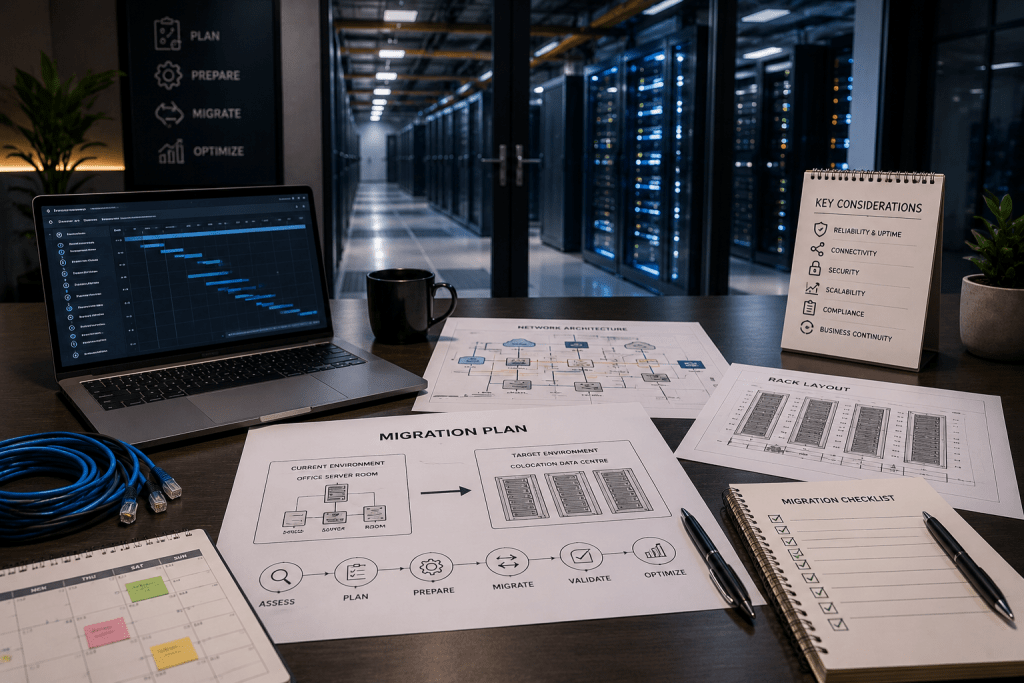
For companies moving from an office server room, Onix offers a practical path into professional colocation. Businesses can start with the space they need now, while keeping room to grow as their requirements change. Options include racks, private cages and larger dedicated environments for organisations with greater space and power needs.
The facility also gives customers access to a strong connectivity ecosystem, including multiple network providers, Tier I carriers, cloud providers, diverse cable routes and dedicated Meet Me Rooms. That flexibility is difficult to recreate in a typical office environment. For businesses under pressure to improve resilience, support growth, satisfy audits or reduce the burden on internal IT teams, this can change the conversation. It moves infrastructure from something the business is simply trying to keep running into something it can build on with greater confidence.
A better question for business leaders
The server room may still be working, but that does not automatically mean it is still the right answer. For many organisations, the real issue is not whether the current setup can survive another month or another year. It is whether that setup is strong enough for the role the business now expects it to play.
If digital systems are important to customers, staff, revenue, compliance obligations or growth plans, then the environment supporting those systems deserves serious attention. A server room may have carried the business to this point, but the next stage of growth may require an environment built specifically for resilience, connectivity, security and scale.
For organisations reviewing their infrastructure strategy, Onix can help assess current needs, explore colocation options and plan a practical move into a secure, professionally managed data centre environment.
Ready to move beyond the office server room?
If your business still depends on an in-house server room, now is the time to review whether it is still fit for purpose. Onix can help you assess your current infrastructure, understand your colocation and connectivity options, and plan a practical move into a secure, resilient data centre environment.
Speak to the Onix team about a smarter path to professional colocation in Accra.